 Save
Save There's something almost meditative about standing at the stove with a mountain of onions, watching them slowly transform from sharp and papery to deep amber gold. My first attempt at French onion soup wasn't planned—I had bought far too many onions at the farmers market and needed to use them before they went soft. What started as an accident became an obsession, and now I understand why this humble bistro classic has endured for centuries. The magic isn't in fancy ingredients or complicated techniques; it's in patience and the willingness to let time do the work.
I made this for my sister on a gray November evening when she needed comfort food more than conversation. We sat at the kitchen counter, watching the cheese bubble and char under the broiler, and neither of us said much until we were halfway through our bowls. She looked up from hers with tears in her eyes—not from sadness, but from the sheer warmth of it all, both literal and otherwise.
Ingredients
- Large yellow onions (6, thinly sliced): Yellow onions caramelize beautifully and develop a natural sweetness that's perfect for this soup; avoid red onions as they won't give you that deep golden color.
- Unsalted butter (2 tablespoons): Butter carries the flavor better than oil alone and creates that rich mouthfeel that makes this soup feel luxurious.
- Olive oil (1 tablespoon): The combination of butter and oil prevents burning and gives you more control over the caramelization process.
- Beef broth (6 cups): Quality broth makes all the difference—if you can, use homemade or a low-sodium version so the onions remain the star.
- Dry white wine (1/2 cup, optional): This adds a subtle brightness that cuts through the richness; if you skip it, add an extra splash of broth.
- Garlic (2 cloves, minced): Just enough to whisper in the background without overpowering the caramelized onions.
- Sugar and salt: A teaspoon of sugar helps the onions brown faster and enhances their natural sweetness.
- Fresh thyme and bay leaf: These aromatics simmer quietly in the background, adding herbal notes that tie everything together.
- Crusty French bread (4 slices, about 1 inch thick): The bread acts as a raft for the cheese and soaks up the broth without falling apart.
- Gruyère cheese (2 cups, grated): Gruyère melts smoothly and has a nutty complexity that pairs perfectly with caramelized onions; it's worth seeking out.
Tired of Takeout? 🥡
Get 10 meals you can make faster than delivery arrives. Seriously.
One email. No spam. Unsubscribe anytime.
Instructions
- Combine your fats and heat gently:
- In a large heavy-bottomed pot, melt butter with olive oil over medium heat until it foams slightly. The combination prevents the butter from burning while keeping the heat steady.
- Add onions and let them soften:
- Slice your onions thinly and add them to the pot, stirring occasionally for about 15 minutes until they're soft and translucent. You'll notice the aroma starting to build—that's the sulfur compounds beginning to break down.
- Coax out the sweetness with sugar and salt:
- Sprinkle the sugar and salt over the onions and continue cooking, stirring more frequently now, for 30 to 40 minutes until they're deeply golden and caramelized. This is where patience matters; resist the urge to rush by turning up the heat, as that will scorch them instead.
- Toast the garlic briefly:
- Add minced garlic and cook for just one minute, stirring constantly, until fragrant but not brown.
- Deglaze and simmer:
- Pour in the white wine if using, scraping the bottom of the pot to release all those browned, flavorful bits stuck there. Let it bubble for 2 to 3 minutes, then add your broth, thyme, bay leaf, and pepper.
- Build the broth:
- Bring everything to a boil, then lower the heat and simmer uncovered for 30 minutes, allowing the flavors to meld. Remove the thyme sprigs and bay leaf before serving.
- Toast your bread:
- While the soup simmers, preheat the broiler and arrange bread slices on a baking sheet, toasting them under the broiler until golden on both sides.
- Assemble and finish:
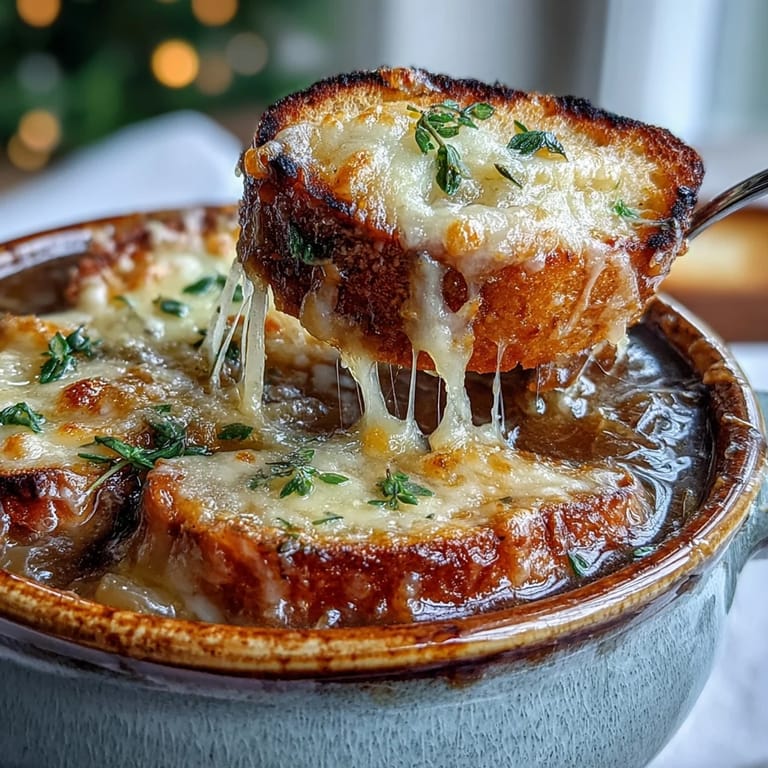
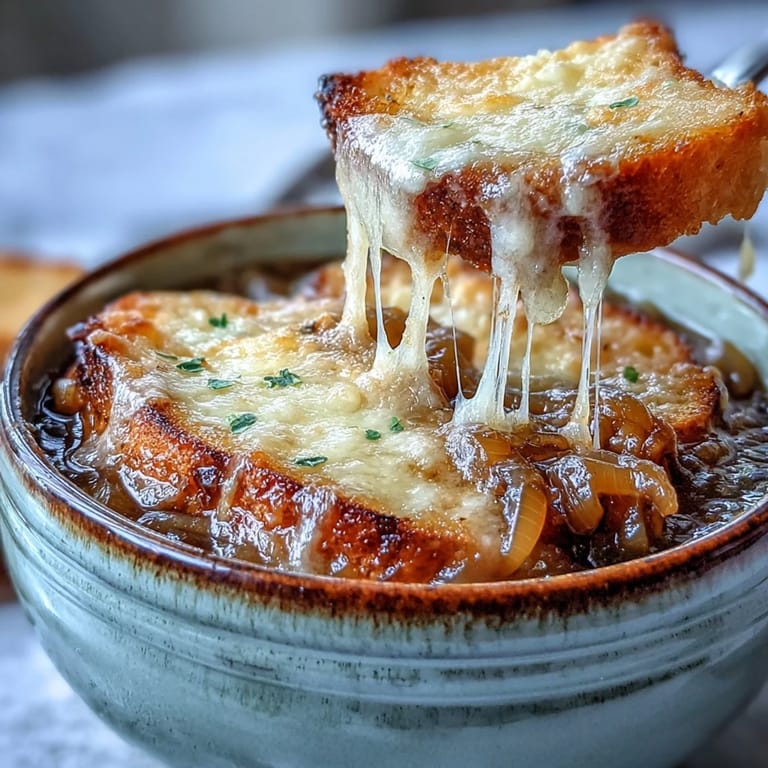
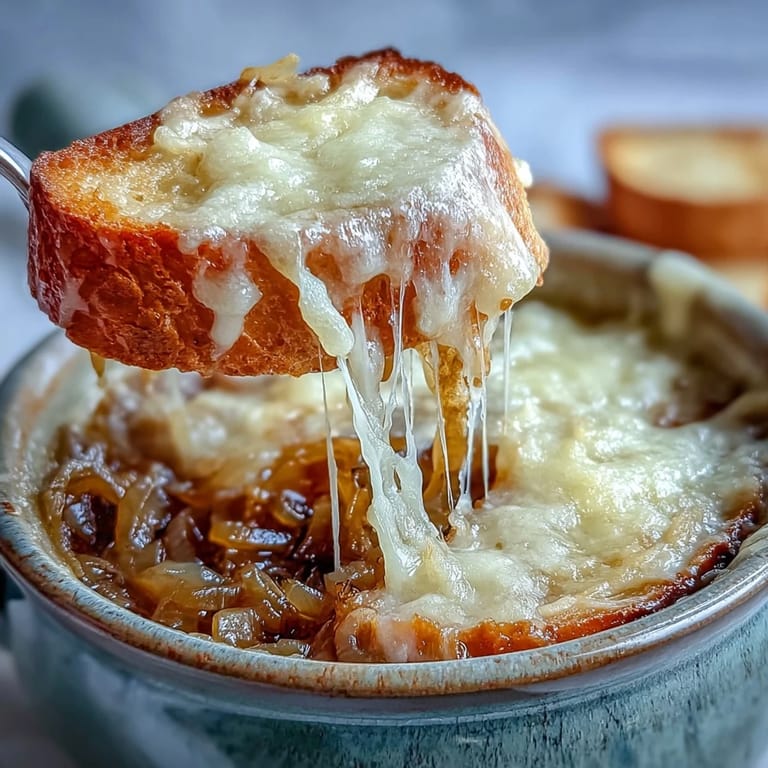
- Ladle the hot soup into oven-safe bowls, top each with a slice of toasted bread and a generous handful of grated Gruyère. Place the bowls under the broiler for 2 to 3 minutes until the cheese is melted and bubbling slightly at the edges, then serve immediately while everything is still steaming.
 Save
Save There was a moment during that November dinner when my sister set down her spoon and said this soup had fixed her entire day. It sounds dramatic until you realize that the best cooking isn't about impressing anyone—it's about showing up with something warm and thoughtfully made.
The Art of Caramelization
Caramelizing onions properly is less a technique and more a relationship with time. The Maillard reaction—that browning that creates complex flavors—happens gradually and unevenly, which is why constant stirring prevents burning while encouraging deeper color. Around the 25-minute mark, the onions shift from pale gold to a richer amber, and around 35 minutes they'll be almost mahogany. Watch for the moment when they smell sweet rather than sharp; that's your signal you're close.
Why This Soup Feels Like Luxury on a Budget
French onion soup teaches a fundamental cooking lesson: you don't need expensive ingredients to create something that tastes expensive. Onions are often among the cheapest items at the market, yet when treated with respect and time, they transform into something restaurant-worthy. The cheese on top is the only indulgence, but it's a crucial one—it provides the finish that makes each spoonful feel intentional and complete. The bread acts as both vessel and textural contrast, absorbing the savory broth while maintaining just enough structure to bite through.
Small Variations That Make a Difference
Once you've made this soup once, you'll start noticing places where your own kitchen preferences can shine through. Some nights I add a splash more wine for brightness, other times I skip it entirely when I want the onion sweetness front and center. The aromatics can shift slightly—a pinch of nutmeg is unexpected but not unwelcome, and a tiny touch of balsamic vinegar adds depth without announcing itself. The bread toasting is optional but worthwhile; it prevents sogginess and adds textural interest that plain bread won't provide.
- If Gruyère is hard to find or too expensive, Emmental or aged Swiss cheese works beautifully as a substitute.
- Vegetarian versions are equally satisfying when made with vegetable broth and given the same caramelization care.
- Rub the toasted bread with a cut garlic clove for subtle extra flavor that won't overpower the soup.
 Save
Save Every time I make this soup, I'm reminded that the best recipes are the ones that improve with repetition, not the ones that dazzle on the first try. This is a dish meant to be cooked again and again until it becomes second nature, until you stop following steps and start cooking by feel.
Recipe Guide
- → How do I achieve properly caramelized onions?
Cook sliced onions over medium heat with butter and olive oil for about 15 minutes until softened. Sprinkle with sugar and salt, then continue cooking for 30–40 minutes while stirring frequently. The onions should turn deep golden brown and develop a sweet, concentrated flavor.
- → Can I make this vegetarian?
Absolutely. Simply substitute the beef broth with high-quality vegetable broth. The caramelized onions provide plenty of depth and flavor on their own. Many traditional French versions actually use vegetable or water-based broths.
- → What type of onions work best?
Yellow onions are ideal for their balance of sweetness and flavor. You can also use a mix of yellow and red onions for slightly different flavor notes. Avoid sweet onions as they caramelize too quickly and don't develop the same depth.
- → Can I substitute the Gruyère cheese?
While Gruyère is traditional and offers the best flavor and melting properties, you can use Emmental, Swiss, or a combination of Gruyère and Parmesan. Just ensure the cheese melts well and has good flavor.
- → How long does this keep and can I freeze it?
The soup base (without bread and cheese) keeps refrigerated for up to 5 days and freezes well for 3 months. The flavor actually improves after a day or two. Add fresh bread and cheese when reheating for the best texture and results.