 Save
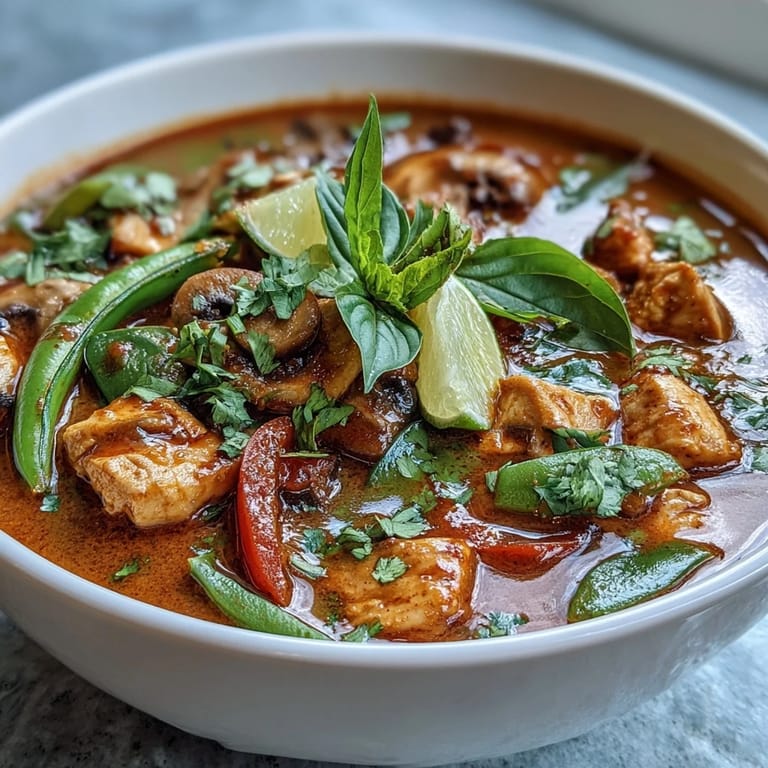
Save There's a particular Tuesday evening I keep coming back to when I think about this soup—not because it was a special occasion, but because it was the opposite. I'd had a long day, the kitchen felt cold, and I was craving something that tasted like warmth and care without requiring much energy. I pulled out a can of coconut milk, some curry paste I'd been sitting on, and chicken from the fridge, and within forty minutes the whole apartment smelled like a Thai restaurant. That night, I learned that comfort doesn't always require hours of planning; sometimes it just needs the right aromatics and a little courage.
I made this soup for my neighbor who'd just moved in, and we ended up talking for three hours at her kitchen table instead of unpacking boxes. She said later that the soup made the whole apartment feel like home on day one. That's when I realized this isn't just dinner—it's a way of saying welcome, or I'm thinking of you, or simply, let's sit together for a while.
Ingredients
- Boneless, skinless chicken thighs or breasts (400 g): Thighs stay more tender and forgiving, but breasts work fine if that's what you have—just don't overcook them.
- Fresh ginger and garlic: The fresher these are, the more their brightness cuts through the richness of the coconut milk; minced garlic releases its oils faster than sliced.
- Shallots: They're sweeter than onions and dissolve almost entirely into the broth, creating a subtle depth without any harsh bite.
- Red curry paste (2 tbsp): Start with this amount and taste as you go—some brands are much spicier than others, and you can always add more.
- Full-fat coconut milk (400 ml): Don't reach for lite; the full-fat version is what creates that silky, luxurious texture that makes this soup feel indulgent.
- Chicken broth (750 ml): A good quality broth matters more than you'd think—it's half your soup, so taste it before you buy.
- Fish sauce and soy sauce: These are your salt and umami backbone; they're not optional, but gluten-free tamari works perfectly if you need it.
- Brown sugar: Just a teaspoon balances the heat and saltiness without making the soup sweet—trust the small amount.
- Lime juice: Always use fresh; bottled lime juice tastes thin and one-dimensional compared to the real thing.
- Red bell pepper and shiitake mushrooms: They're mild enough to let the curry shine, but substantial enough to make the soup feel like a complete meal.
- Snow peas: These stay slightly crisp even after simmering, adding a texture contrast that keeps every spoonful interesting.
- Cilantro and Thai basil: Cilantro is the workhorse, but Thai basil—if you can find it—adds a subtle anise note that makes people ask what your secret is.
Tired of Takeout? 🥡
Get 10 meals you can make faster than delivery arrives. Seriously.
One email. No spam. Unsubscribe anytime.
Instructions
- Bloom your aromatics:
- Heat oil in a large pot over medium heat and let the shallots, ginger, and garlic sizzle for about two minutes until the air above the pot starts to smell alive and spicy. This step is where the magic begins—you're not just cooking ingredients, you're waking them up.
- Awaken the curry paste:
- Add the red curry paste and stir constantly for one full minute, letting it toast slightly in the hot oil and release its deepest flavors. You'll notice the smell shift from raw and sharp to warm and complex.
- Coat the chicken:
- Add your chicken pieces and stir everything together for two to three minutes, making sure each piece gets coated in that aromatic, reddish paste. The chicken won't be cooked yet, but it will start to change color on the outside.
- Build the broth:
- Pour in the chicken broth and coconut milk together, stirring gently until the curry paste fully dissolves and the liquid turns a beautiful creamy orange-red. Bring everything to a gentle simmer—not a boil, as aggressive heat can make the chicken tough.
- Season the base:
- Add fish sauce, soy sauce, and brown sugar, stirring well to distribute them evenly throughout the broth. Taste it now; it should smell intoxicating and taste savory with just a hint of sweetness.
- Cook the vegetables:
- Add the bell pepper, mushrooms, and snow peas, then let everything simmer for ten to twelve minutes until the chicken is completely cooked through and the vegetables are tender but not soft. Set a timer; this is the moment when you can step away and let the soup almost finish itself.
- Finish with brightness:
- Stir in the fresh lime juice and taste again, adjusting with more fish sauce if it needs saltiness, lime if it needs brightness, or a pinch of sugar if the heat feels too intense. This final taste is personal—your version might be more sour or more savory than mine, and that's exactly right.
- Serve and celebrate:
- Ladle the soup into bowls and let everyone pile on cilantro, Thai basil, and lime wedges before eating. The fresh herbs are not decoration; they're part of the dish.
 Save
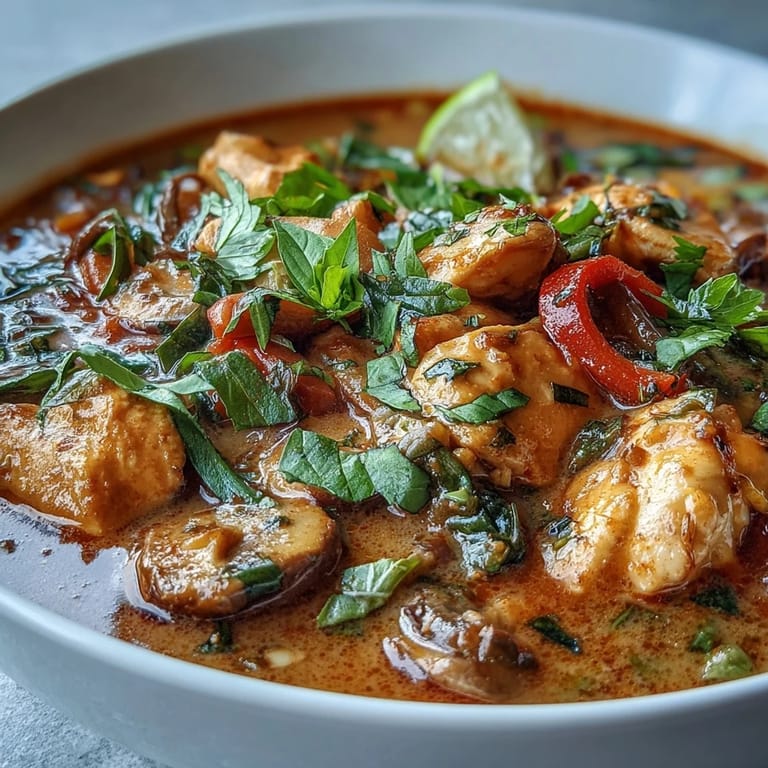
Save I made this soup once for my partner on a morning when neither of us had slept well, and she said it was the first thing that day that felt like everything might be okay. There's something about spice and coconut milk and the ritual of sharing a warm bowl that transcends the actual food.
Variations and Swaps
Shrimp cooks much faster than chicken—add it in the last three minutes so it stays tender and doesn't turn rubbery. Tofu absorbs the broth beautifully and is just as satisfying; use firm tofu cut into cubes and add it with the vegetables. I've also made this with green curry paste when I wanted something slightly more herbaceous, and it was equally good, just lighter in flavor. The backbone of aromatics and coconut milk stays the same, so you can really make this soup your own.
Building Layers of Heat
If you love spice, this is your playground, but the trick is building heat in stages rather than dumping hot sauce in at the end. Start with two tablespoons of curry paste, taste after simmering, and add a half tablespoon more if you want to push it further. Fresh red chili slices are better than extra paste because they give you heat without extra saltiness, and they look beautiful floating on top of each bowl.
Making It a Complete Meal
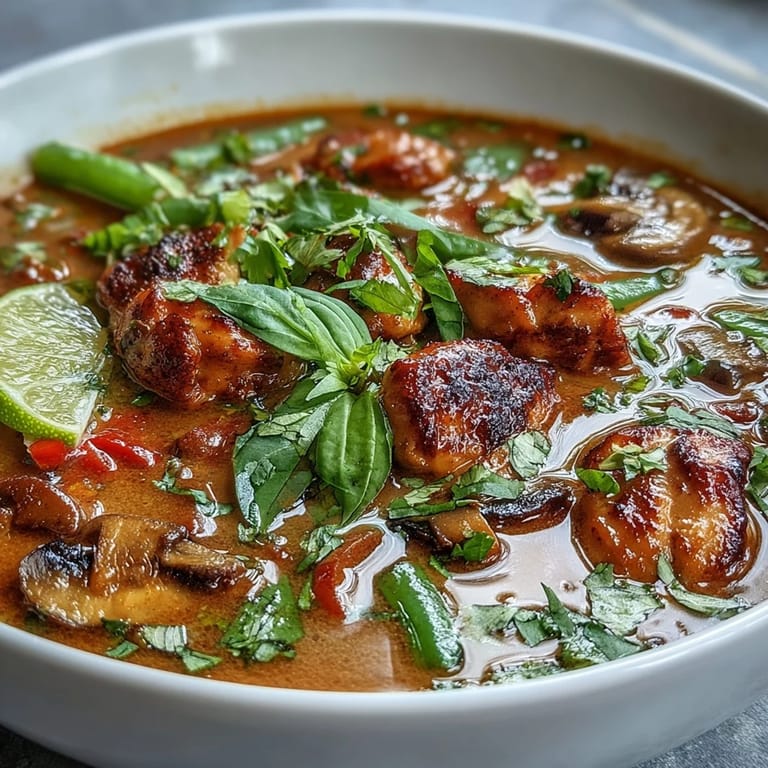
This soup is gorgeous on its own, but I often add cooked rice noodles to make it more filling, or serve it alongside jasmine rice for people who want something to soak up the broth. A side of cucumber salad with a sharp lime-fish sauce dressing cuts through the richness perfectly. Any leftover soup actually tastes better the next day when the flavors have had time to settle and deepen.
- Rice noodles added to the bowl just before serving stay separated and don't absorb all the broth.
- Leftover soup keeps in the fridge for three days and reheats gently on the stove without losing any of its character.
- Serve this with something crisp and white—a Riesling or even a cold lager, if that's what you're drinking.
 Save
Save This soup has become my answer to almost every kitchen dilemma—when I'm tired, when someone needs comfort, when the weather shifts and suddenly feels cold. It's proof that some of the best meals start with the simplest idea and a willingness to just begin.
Recipe Guide
- → Can I make this soup spicier?
Absolutely. Increase the red curry paste to 3 tablespoons or add fresh sliced Thai chilies during cooking. You can also serve with additional chili slices on the side so diners can adjust heat individually.
- → What's the best cut of chicken to use?
Chicken thighs are ideal because they stay tender and juicy during simmering. Breasts work too but may dry out slightly. Cut either into uniform bite-sized pieces so they cook evenly.
- → Can I make this vegetarian?
Yes. Replace chicken with firm tofu cubes and use vegetable broth instead of chicken broth. Omit fish sauce and add extra soy sauce or a pinch of salt to maintain seasoning balance.
- → How long does this soup keep?
Store in an airtight container for up to 4 days. The flavors actually develop and improve over time. Reheat gently over medium-low heat, adding a splash of water or broth if needed to adjust consistency.
- → Can I freeze this curry soup?
Yes, freeze for up to 3 months. The coconut milk may separate slightly upon thawing but will emulsify again when reheated. Cool completely before freezing in freezer-safe containers, leaving some space for expansion.
- → What vegetables work well in this soup?
Beyond the suggested bell peppers, mushrooms, and snow peas, try baby corn, bamboo shoots, bok choy, or snap peas. Add heartier vegetables like carrots or broccoli earlier so they have time to tenderize.